
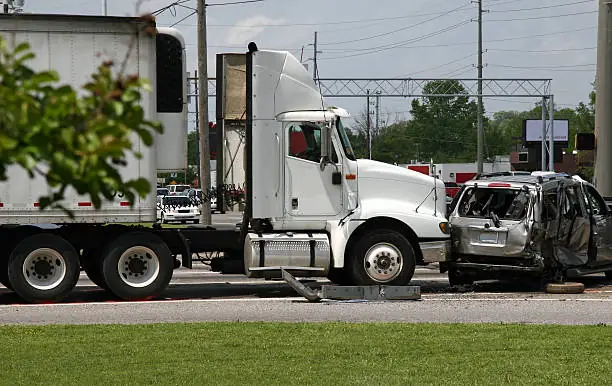
A truck accident is not just a larger version of a car accident. When a tractor-trailer, 18-wheeler, dump truck, delivery truck, or other commercial vehicle collides with a passenger car, the damage can be devastating. The injuries are often more severe, the insurance issues are more complex, and the companies involved usually move quickly to protect themselves.
If you are searching for a truck accident lawyer in Scranton, you are likely dealing with more than a damaged vehicle. You may be facing emergency medical care, surgeries, missed work, long-term pain, and a claims process that already feels stacked against you.
Truck accident cases require a different level of investigation than ordinary crash claims. A police report may tell part of the story, but it usually does not answer the deeper questions: Was the truck driver fatigued? Were federal safety rules violated? Was the cargo improperly loaded? Did the trucking company ignore maintenance problems? Was the driver properly trained and qualified? Those questions matter because truck accident liability often reaches beyond the driver.
This pillar page explains how truck accident claims work in Scranton and throughout Pennsylvania, what makes them different, what evidence matters, and how Moran Law Group helps injured people pursue compensation after serious commercial vehicle crashes.
If you were injured in a truck accident and want to understand your rights, you can contact Moran Law Group for a free consultation.
Why Truck Accident Cases Are Different
Truck accidents are different for three major reasons: size, regulation, and corporate involvement.
A fully loaded commercial truck can weigh tens of thousands of pounds. When that vehicle collides with a passenger car, SUV, motorcycle, or pedestrian, the force of impact can cause catastrophic injuries. These are not usually “minor soft tissue” cases. Victims may suffer traumatic brain injuries, spinal injuries, fractures, internal trauma, amputations, burns, or fatal injuries.
Second, commercial trucking is heavily regulated. Federal Motor Carrier Safety Administration rules govern issues like driver hours, electronic logs, cargo securement, vehicle inspection, maintenance, and driver qualification. For example, federal hours-of-service rules are found in 49 CFR Part 395, and FMCSA’s electronic logging device rule is intended to help track and manage driver records of duty status.
Third, truck accidents often involve companies, not just individuals. A crash may involve the truck driver, motor carrier, broker, shipper, cargo loader, maintenance contractor, leasing company, or manufacturer. Each may have its own insurer and defense team. That means the case can become complex quickly.
Truck Accidents in Pennsylvania: Why the Risk Matters
Pennsylvania’s roadway system includes major commercial trucking routes, including interstates, state highways, industrial corridors, and local roads used by delivery and construction vehicles. PennDOT’s 2024 Crash Facts publication is a statewide statistical review of reportable crashes compiled from law enforcement crash reports under the Pennsylvania Vehicle Code.
Nationally, FMCSA’s Large Truck and Bus Crash Facts report tracks fatal, injury, and property-damage-only crashes involving large trucks and buses. These reports matter because they show what injury victims already know from experience: large truck crashes are a serious safety issue, and they require careful review of driver conduct, company practices, and regulatory compliance.
In Scranton and Northeast Pennsylvania, truck crashes may involve I-81, the Pennsylvania Turnpike, Route 6, Route 11, local delivery routes, construction zones, warehouses, and industrial sites. The location matters because it can affect available evidence, potential defendants, and whether state, federal, or municipal issues are involved.
Common Types of Truck Accidents
Truck accident claims cover a wide range of crash scenarios. Each requires its own investigation.
Rear-End Truck Accidents
A rear-end collision involving a commercial truck can be devastating because trucks need far more distance to stop than passenger vehicles. If a truck driver is speeding, distracted, fatigued, or following too closely, they may not be able to stop in time when traffic slows.
These crashes often involve questions about braking distance, speed, driver attention, road conditions, and maintenance of the braking system.
Jackknife Accidents
A jackknife occurs when the trailer swings out at an angle from the cab. This can block multiple lanes and cause multi-vehicle crashes. Jackknifes may be caused by sudden braking, slippery roads, speeding, improper braking technique, or equipment problems.
Rollover Accidents
Truck rollovers can happen when a driver takes a curve too fast, cargo shifts, the truck is overloaded, or the driver makes a sudden steering correction. Rollover cases often require investigation into speed, cargo securement, load balance, route conditions, and driver training.
Underride Accidents
An underride crash happens when a smaller vehicle slides underneath a truck or trailer. These collisions are often catastrophic or fatal. They may involve questions about trailer guards, visibility, stopping distance, and whether the truck was safely positioned.
Blind Spot Accidents
Commercial trucks have large blind spots. However, “I didn’t see them” is not an excuse if the driver failed to check mirrors, signal properly, or operate with reasonable care. Blind spot crashes often involve unsafe lane changes, merging, and side-swipe collisions.
Improperly Loaded Truck Accidents
Cargo loading is not just an internal trucking issue; it is a roadway safety issue. Federal cargo securement rules apply to trucks, truck tractors, semitrailers, full trailers, and pole trailers, and are designed to prevent cargo from shifting or falling. When cargo shifts or spills, the truck can lose stability or create hazards for other drivers.
Common Causes of Truck Accidents
Truck accidents are rarely “just accidents.” Many are the result of preventable safety failures.
Driver Fatigue
Truck driver fatigue is one of the most important issues in commercial vehicle litigation. Fatigue affects reaction time, judgment, lane control, braking, and hazard recognition. Hours-of-service rules exist because tired truck drivers are dangerous, and electronic logging devices exist to help track duty status records.
A fatigue claim may involve reviewing driver logs, ELD data, dispatch schedules, fuel receipts, GPS data, delivery deadlines, and communications between the driver and company.
Distracted Driving
Truck drivers may be distracted by phones, dispatch devices, GPS screens, food, paperwork, or in-cab systems. A distracted truck driver operating a massive vehicle can cause catastrophic harm in a matter of seconds.
Speeding or Driving Too Fast for Conditions
A truck traveling too fast for traffic, weather, road grade, or curve conditions may not be able to stop or maneuver safely. Speed can also worsen crash severity.
Poor Maintenance
Commercial trucks require consistent inspection and maintenance. Brake problems, tire failures, steering defects, lighting issues, and coupling problems can all contribute to serious crashes.
Improper Hiring or Training
Motor carriers must maintain driver qualification files, and FMCSA materials explain that carriers must maintain qualification files for each employed driver under 49 CFR 391.51. If a company hires an unqualified driver, ignores safety history, or fails to train properly, company negligence may become a major part of the case.
Improper Cargo Loading
Overloaded, unbalanced, or unsecured cargo can make a truck unstable. In some cases, the driver may not be the only responsible party. The loading company, shipper, warehouse, or logistics company may also be involved.
Who Can Be Liable in a Truck Accident Case?
One of the biggest mistakes after a truck accident is assuming the driver is the only responsible party.
Potential defendants may include:
The truck driver, if they were speeding, distracted, fatigued, impaired, or otherwise negligent.
The trucking company, if it failed to train, supervise, schedule, maintain, or enforce safety rules.
The cargo loader or shipper, if improper loading caused or contributed to the crash.
A maintenance company, if poor repairs or inspections allowed unsafe equipment on the road.
A manufacturer, if a defective tire, brake component, coupling system, or other part contributed to the crash.
A broker or logistics entity, depending on its role and control over the transportation arrangement.
This is why deep investigation matters. The goal is not simply to identify someone to blame. The goal is to identify every party whose conduct contributed to the crash and every insurance policy that may be available to compensate the injured person.
Evidence That Matters in Truck Accident Claims
Truck cases are evidence-heavy. Some of the most important evidence may be in the hands of the trucking company, which is why early legal action is so important.
Key evidence can include:
Electronic logging device data.
Driver logs and hours-of-service records.
Truck “black box” or event data recorder information.
GPS and dispatch records.
Driver qualification file.
Drug and alcohol testing records.
Maintenance and inspection records.
Cargo loading documents and weight tickets.
Dashcam or surveillance footage.
Company safety policies.
Prior violations or crash history.
Police crash reports and reconstruction materials.
Witness statements.
Physical evidence from the vehicles and roadway.
The earlier this evidence is preserved, the better. Some electronic data can be overwritten. Vehicles can be repaired or destroyed. Witness memories fade. A strong truck accident lawyer will send preservation letters quickly and investigate before the defense shapes the narrative.
Pennsylvania Law: Comparative Negligence
Insurance companies often try to blame the injured person, even in truck accident cases. Pennsylvania’s comparative negligence law allows an injured person to recover damages as long as their negligence was not greater than the causal negligence of the defendant or defendants, but damages are reduced by the percentage of negligence attributed to the plaintiff.
In practical terms, this means the defense may argue that you were speeding, distracted, following too closely, failed to avoid the crash, or contributed in some other way. Even if those arguments are weak, they can be used to reduce settlement value.
A truck accident lawyer’s job is to push back with evidence, not assumptions.
Pennsylvania Statute of Limitations
Most Pennsylvania personal injury claims must be filed within two years. Pennsylvania law provides a two-year limitation period for actions to recover damages for injuries to the person or death caused by another’s wrongful act, neglect, unlawful violence, or negligence.
That does not mean you should wait two years. Truck accident cases require early investigation. Waiting can result in lost evidence, unavailable witnesses, and weakened leverage against the trucking company and insurers.
Damages in a Truck Accident Claim
A truck accident claim may include compensation for both economic and non-economic losses.
Economic damages may include emergency care, hospitalization, surgery, physical therapy, medication, future medical treatment, lost wages, loss of earning capacity, vehicle damage, and out-of-pocket expenses.
Non-economic damages may include pain and suffering, emotional distress, loss of enjoyment of life, disability, scarring, disfigurement, and the impact on family life.
In fatal truck accident cases, surviving family members and the estate may have wrongful death and survival claims. These cases require careful handling because the damages involve both financial loss and the profound human loss caused by a preventable death.
Why Insurance Companies Fight Truck Accident Claims
Truck accident claims can involve large commercial policies. That does not mean the insurance company will simply pay fairly.
In fact, the opposite is often true.
Because the exposure is high, insurers may fight harder. They may argue that the truck driver was not at fault, that the injured person caused the crash, that the injuries were pre-existing, or that the medical treatment was excessive. They may also try to settle early before the full extent of damages is known.
Trucking companies and insurers may have investigators and lawyers working almost immediately after the crash. Injured people deserve the same level of seriousness on their side.
How Moran Law Group Helps Truck Accident Victims
Moran Law Group approaches truck accident cases with the understanding that these claims require more than routine personal injury handling.
We investigate the crash thoroughly. We identify all potentially responsible parties. We work to preserve critical evidence before it disappears. We analyze the role of federal and Pennsylvania trucking rules. We document the full extent of your medical, financial, and personal losses.
Most importantly, we understand that our clients are not just “claimants.” They are people whose lives have been disrupted by a crash they did not ask for and could not prevent.
If you were hurt in a truck accident in Scranton or anywhere in Northeast Pennsylvania, you can contact Moran Law Group to discuss your case and next steps.
Frequently Asked Questions About Truck Accident Lawyers in Scranton
What should I do after a truck accident in Scranton?
After a truck accident, get medical attention immediately and make sure the crash is reported to police. If you are able, take photos of the scene, vehicle damage, road conditions, and any visible injuries. Get witness contact information and avoid giving detailed recorded statements to insurance companies before speaking with a lawyer. Truck accident evidence can disappear quickly, especially electronic data and maintenance records. The sooner an attorney can begin preserving evidence, the stronger your case may be.
Why are truck accident cases more complex than car accident cases?
Truck accident cases are more complex because they often involve commercial vehicles, corporate defendants, federal regulations, and multiple insurance policies. Unlike a standard car crash, liability may extend beyond the driver to the trucking company, maintenance provider, cargo loader, or manufacturer. These cases also involve specialized evidence such as electronic logs, driver qualification files, black box data, and maintenance records. Because the injuries are often severe and insurance coverage may be significant, trucking companies and insurers usually defend these claims aggressively.
Who can be held responsible for a truck accident?
The truck driver may be responsible if they were speeding, distracted, fatigued, impaired, or otherwise negligent. However, liability may also extend to the trucking company, cargo loading company, maintenance provider, shipper, broker, or manufacturer. For example, if the trucking company ignored hours-of-service violations or hired an unsafe driver, it may share responsibility. If cargo was improperly loaded, another company may be liable. A full investigation is necessary to identify every responsible party and every available insurance policy.
How long do I have to file a truck accident lawsuit in Pennsylvania?
In most Pennsylvania personal injury cases, including truck accident claims, the statute of limitations is two years from the date of injury. That deadline comes from Pennsylvania’s two-year limitation period for injury claims. Waiting is risky because truck accident cases depend heavily on evidence that may be lost, overwritten, repaired, or destroyed. Even if the deadline seems far away, it is wise to speak with a lawyer as soon as possible so important records can be preserved and the investigation can begin.
What compensation can I recover after a truck accident?
Compensation may include medical expenses, future medical care, lost wages, loss of earning capacity, pain and suffering, emotional distress, property damage, and out-of-pocket costs. In severe cases, damages may also include long-term disability, home modifications, rehabilitation, and loss of quality of life. In fatal truck accident cases, families may have wrongful death and survival claims. The value of a case depends on the severity of injuries, available insurance, liability evidence, and the long-term impact on the injured person’s life.