
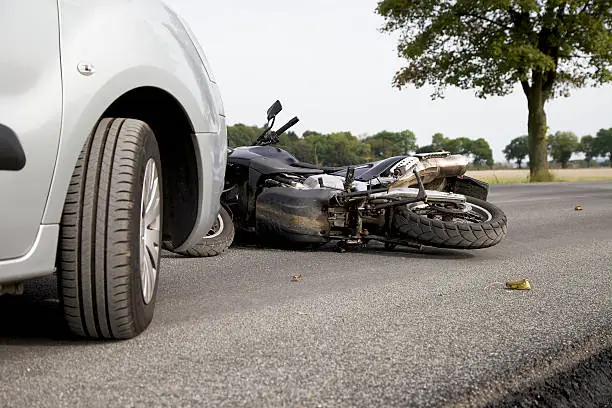
Motorcycle crashes are different from almost every other kind of motor vehicle accident. Riders do not have a steel frame around them. They do not have airbags, seatbelts, or the same margin for error that drivers in passenger vehicles often take for granted. When a motorcycle crash happens, the injuries are often immediate, serious, and life-changing.
That is only part of the problem.
The other part is what happens after the crash. Insurance companies often approach motorcycle claims with built-in skepticism. Drivers who caused the wreck may insist they “never saw the bike.” Witnesses may describe the crash in incomplete or conflicting ways. And injured riders are often forced to deal with a frustrating mix of pain, medical bills, missed work, bike damage, and unfair assumptions about how motorcyclists ride.
That is why this page needs to be more than a short article. If you are searching for a motorcycle accident lawyer Scranton, you are probably not just looking for a definition or a quick checklist. You are trying to understand whether you have a case, what your case may be worth, what mistakes to avoid, and how to protect yourself when the insurance company starts trying to control the story.
This pillar page is designed to answer those questions in a serious, practical way.
At Moran Law Group, we represent injured people in Scranton and across Northeast Pennsylvania. When motorcycle riders are hurt because another driver was careless, distracted, aggressive, impaired, or simply failed to yield, we work to hold the responsible parties accountable and pursue the compensation our clients need to move forward.
If you were hurt in a motorcycle crash and want to talk through what happened, you can contact Moran Law Group for a free consultation.
Why Motorcycle Accident Cases Are Different
A motorcycle crash is not just a “car accident with a bike involved.” Legally, medically, and strategically, these cases often require a different approach.
First, the injuries are usually more severe. A rider may be thrown from the bike, crushed between vehicles, dragged across the road, or struck a second time after the initial impact. Even a crash at a speed that might cause moderate injuries in a car can cause fractures, brain trauma, spinal damage, or severe road rash for a motorcyclist.
Second, fault is often disputed in predictable ways. In many motorcycle cases, the at-fault driver says some version of the same thing: “I didn’t see them.” That statement may sound simple, but legally it can reveal a failure to keep a proper lookout, a failure to yield, or distracted driving. The problem is that insurers often try to turn that same fact pattern into a debate about whether the rider was “going too fast” or “came out of nowhere.”
Third, motorcycle cases are often affected by bias. Some insurance adjusters, defense lawyers, and even jurors start with assumptions that riders are risk-takers, aggressive, or partly to blame. Those assumptions are unfair, but they are real. A strong motorcycle injury case must deal with that reality directly rather than pretending it does not exist.
Finally, these cases often involve larger damages. Serious orthopedic injuries, surgeries, long recovery periods, permanent scarring, chronic pain, and loss of earning capacity can significantly increase the value of a claim. That means the insurance company has even more incentive to fight hard, deny responsibility, or pressure the rider into a fast, low settlement.
Motorcycle Crashes in Pennsylvania: Why the Risk Is Real
PennDOT’s public crash data and motorcycle statistics show that Pennsylvania continues to track motorcycle crashes, fatalities, registrations, and rider licensing as a distinct safety category, and the Commonwealth maintains a dedicated motorcycle safety program because motorcycle crashes remain a serious roadway safety issue.
That matters because motorcycle accident claims do not arise in a vacuum. They happen in a real-world environment where riders face specific dangers:
Drivers fail to look twice at intersections. Vehicles drift into motorcycle lanes during unsafe lane changes. Cars turn left in front of oncoming riders. Distracted driving shortens reaction time. Poor road conditions that might be minor annoyances for a car can become major hazards for a motorcycle.
In Scranton and the surrounding area, riders also deal with a mix of city traffic, highway travel, rural roads, uneven pavement, weather shifts, and drivers who are simply not attentive enough to share the road safely.
The Most Common Causes of Motorcycle Accidents in Scranton
Many motorcycle crashes follow recurring patterns. Understanding those patterns helps explain why these cases happen and how fault is proven.
Left-turn collisions
This is one of the most common and most dangerous motorcycle crash scenarios. A driver turning left at an intersection or into a driveway misjudges the rider’s speed, fails to see the motorcycle, or tries to “beat” the oncoming bike through the turn. The rider often has very little time to react.
These crashes are especially violent because they often involve direct impact to the front or side of the motorcycle. They can throw the rider over the handlebars or into the turning vehicle.
Failure to yield
A motorcycle rider may have the right of way, but that does not prevent a crash when another driver rolls through a stop sign, pulls out from a side street, or enters traffic without enough time or distance.
Failure-to-yield cases often sound simple, but insurers may still argue about visibility, speed, and reaction time. That is one reason early evidence gathering matters so much.
Unsafe lane changes
Motorcycles are smaller than passenger vehicles, and careless drivers sometimes use that as an excuse. In reality, a driver who changes lanes without checking mirrors and blind spots is still negligent. If a car merges into a rider’s lane, sideswipes the bike, or forces the rider off the road, the fact that the bike was “harder to see” usually does not excuse the failure to drive carefully.
Rear-end motorcycle collisions
Many people associate rear-end crashes with whiplash-only claims, but rear-end motorcycle accidents can be far more destructive. If a car hits a motorcycle from behind, the rider can be thrown, pinned, or crushed. Even at lower speeds, the results can be catastrophic.
Distracted driving
Texting, GPS use, in-car screens, food, passengers, and simple inattentiveness all play a role in motorcycle crashes. A driver who looks down for even a moment may miss a rider slowing, turning, or entering an intersection.
Drunk or drug-impaired driving
Impaired drivers pose an obvious danger to everyone, but especially to riders. Delayed reaction time, poor judgment, drifting, and wrong-way driving all create extreme risks for motorcyclists.
Road hazards and defective conditions
Not every motorcycle crash is caused by another vehicle. Potholes, loose gravel, uneven pavement, poor drainage, construction debris, and unsafe roadway design can all contribute to serious wrecks. These cases can be more complex because they may involve government notice rules, contractor liability, or premises-related issues.
The Injuries in Motorcycle Cases Are Often Severe
The reason motorcycle claims are often worth more than standard car accident claims is not because riders are treated differently under the law. It is because the injuries are often dramatically worse.
A motorcycle accident lawyer in Scranton needs to understand not only liability, but also the medicine and long-term impact of common rider injuries.
These may include:
Traumatic brain injuries, including concussions and more severe permanent impairment.
Spinal cord injuries, disc injuries, and chronic back or neck pain.
Fractures to the legs, arms, wrists, ribs, pelvis, collarbone, and facial bones.
Road rash that ranges from skin abrasions to deep tissue injuries requiring grafting.
Crush injuries when the motorcycle or another vehicle lands on the rider.
Internal injuries and internal bleeding.
Shoulder injuries, including rotator cuff tears and dislocations.
Knee injuries, including ligament tears and instability.
Scarring, disfigurement, and permanent mobility limitations.
Psychological trauma, including anxiety, depression, and PTSD.
A serious motorcycle crash can affect nearly every part of a person’s life: work, sleep, mobility, parenting, hobbies, relationships, independence, and confidence. A real case evaluation has to look at all of that, not just at the ER bill and the repair estimate.
What a Motorcycle Accident Lawyer in Scranton Actually Does
People often know they “should probably talk to a lawyer,” but they are not always sure what that actually means in practical terms.
A strong motorcycle accident lawyer Scranton page should answer that directly.
We investigate the crash
That means gathering and analyzing:
Police reports
Witness statements
Scene photographs
Vehicle damage evidence
Surveillance or dashcam footage
Roadway design or traffic-control evidence
In serious cases, accident reconstruction analysis
Motorcycle cases are often won or lost on the details. A lane position, a skid mark, a point of impact, or a witness who saw the turn signal can make a major difference.
We protect the rider from insurance tactics
Insurance adjusters may sound polite, but their goals are predictable:
Get a recorded statement early
Lock the rider into incomplete facts
Minimize the injuries
Argue comparative fault
Push a quick settlement before the medical picture is clear
Once we are involved, we take over communication, control the release of records, and make sure the insurance company is not building its case by using the rider’s uncertainty, pain, or inexperience against them.
We document the full extent of damages
That includes more than current bills. We work to understand:
Past and future medical care
Time missed from work
Loss of earning capacity
Permanent physical limitations
Scarring and disfigurement
Pain and suffering
Loss of enjoyment of life
Need for rehabilitation, assistive devices, or long-term care
The difference between a weak demand package and a strong one is often the difference between a claim that looks temporary and a claim that accurately shows what the rider’s life now looks like.
We negotiate from a position of strength
Many cases settle. That is normal. But motorcycle cases settle better when the defense knows your lawyer is prepared to litigate and try the case if necessary.
We file suit when needed
If the insurer refuses to be reasonable, we can file a lawsuit and push the case into discovery, depositions, expert work, and trial preparation. That litigation posture often changes the quality of the offers.
Pennsylvania Law That Matters in Motorcycle Accident Claims
Because this is a pillar page, it is important to address some of the legal rules that repeatedly shape motorcycle cases in Pennsylvania.
Comparative negligence
Pennsylvania follows a modified comparative negligence rule. Under 42 Pa.C.S. § 7102, an injured plaintiff can still recover damages as long as their negligence is not greater than the defendants’ causal negligence, but the recovery is reduced by the plaintiff’s percentage of fault. In practical terms, that usually means a rider can still recover if they are 50% or less at fault, but not if they are more than 50% at fault.
Why does that matter in motorcycle claims?
Because defense insurers love to argue that the rider was speeding, weaving, too hard to see, too fast for conditions, or otherwise partly to blame. Even when the other driver clearly failed to yield, the insurer may still try to shave value off the case by assigning the rider a percentage of fault.
A good motorcycle accident lawyer in Scranton builds the case to resist that from day one.
Motorcycle helmet law in Pennsylvania
Pennsylvania law generally requires protective headgear for motorcycle riders, but there is an important exception. Under 75 Pa.C.S. § 3525 and PennDOT’s helmet guidance, riders age 21 or older may ride without a helmet if they have either at least two years of riding experience or have completed an approved motorcycle safety course.
That does not mean helmet issues are irrelevant in every case. If a rider suffered head injuries and was not wearing a helmet, the defense may try to argue that the injuries were made worse. But the legal analysis depends on the specific facts, the injury pattern, and how the issue relates to causation and damages.
The key point is that helmet questions are often more nuanced than insurance companies make them sound.
Pennsylvania motorcycle safety and licensing context
PennDOT maintains a formal motorcycle safety program and tracks rider licensing and registrations statewide, underscoring that the Commonwealth treats motorcycle operation as a distinct and regulated roadway activity requiring training and specific safety attention.
That matters because when insurance companies try to paint all riders as reckless, the legal reality is that Pennsylvania has an established licensing and safety framework for motorcyclists. Riders are not second-class road users. They have the same right to use the road safely and lawfully as anyone else.
How Insurance Companies Try to Undervalue Motorcycle Cases
This is one of the most important sections of a true pillar page, because it addresses what injured riders are actually up against.
Insurance companies commonly try to reduce motorcycle claims by doing some combination of the following:
They stereotype the rider. They assume the motorcyclist was aggressive, weaving, or speeding.
They claim visibility excuses the driver. “I didn’t see him” becomes a defense instead of an admission of inattention.
They minimize soft tissue and orthopedic injuries. They say the rider is “healing normally” when the reality is months of pain, injections, therapy, and limited function.
They use repair photos to dispute injury severity. They point to the bike or vehicle and argue the impact “wasn’t that bad.”
They focus on pre-existing issues. If the rider had any prior back, shoulder, or neck complaints, they try to attribute the current pain to the past instead of the crash.
They make early offers. They know riders often face large medical bills and lost income quickly, so they try to settle before future care and long-term limitations are fully understood.
This is why riders should be very cautious about handling a significant motorcycle case alone.
What Compensation May Be Available
A motorcycle accident claim may involve several categories of damages.
Medical expenses can include emergency treatment, hospitalization, surgery, imaging, physical therapy, follow-up care, prescriptions, injections, and future medical treatment reasonably expected.
Lost income can include wages already lost, missed overtime, reduced hours, lost business income for self-employed riders, and long-term loss of earning capacity.
Pain and suffering can include physical pain, emotional distress, anxiety, loss of mobility, interference with hobbies and family life, and the broader human cost of the injuries.
Property losses can include damage to the motorcycle, riding gear, helmet, electronics, and other personal property.
In some especially reckless cases, punitive damages may also be considered, though those depend on the facts and are not available in every case.
A real case value analysis is never just “medical bills times a multiplier.” It requires a deeper look at the rider’s life before and after the crash, the permanency of the injuries, the clarity of fault, and the amount of available insurance.
What To Do After a Motorcycle Crash in Scranton
If a rider is physically able after a crash, some steps can help protect both health and the claim:
Call 911 and make sure there is an official report.
Get medical attention promptly, even if symptoms seem manageable at first.
Photograph the scene, vehicles, roadway, and visible injuries if possible.
Get names and contact information for witnesses.
Do not admit fault or speculate about the cause of the crash.
Preserve the motorcycle, helmet, and riding gear if possible.
Be cautious about recorded statements to insurers.
Talk to a lawyer before accepting any settlement.
Even if some of these things did not happen immediately, that does not necessarily ruin the case. But early action can make a real difference.
Why Moran Law Group Builds Motorcycle Cases Differently
A real pillar page should explain not just what the law is, but how the firm approaches the work.
At Moran Law Group, we understand that motorcycle cases require more than routine claim handling. They require attention to bias, a strong liability story, careful damage presentation, and the willingness to challenge lowball insurance thinking.
We focus on:
Understanding how the crash actually happened
Building evidence early before it disappears
Taking rider injuries seriously, including orthopedic and long-term pain cases
Presenting the rider as a person, not a stereotype
Preparing the case thoroughly enough that the defense understands we are not looking for a quick discount settlement
If you were hurt in a motorcycle wreck and want to understand your options before making a decision, you can contact Moran Law Group to talk through your case.
Frequently Asked Questions About Motorcycle Accident Lawyer Scranton
Do I need a lawyer for a motorcycle accident in Scranton if the other driver was clearly at fault?
You may not need a lawyer for every minor crash, but in most motorcycle cases involving real injuries, legal help is worth serious consideration. Even when fault seems obvious, the insurance company may still dispute how the crash happened, argue that you were partly to blame, or minimize your injuries. Motorcycle claims also tend to involve more serious medical issues and larger damages than standard car accident cases, which gives insurers more incentive to fight. A lawyer can investigate the crash, protect you from insurance tactics, document your damages, and work toward a result that reflects the true impact of the collision.
How much is a motorcycle accident case worth in Pennsylvania?
There is no honest one-size-fits-all number. The value of a motorcycle accident case depends on many factors, including the severity of your injuries, the cost of your medical care, whether you lost time from work, whether you have permanent limitations, how clear fault is, and how much insurance is available. Motorcycle cases are often worth more than standard car accident cases because the injuries are frequently more severe, but value still varies from case to case. A good lawyer will look at the full picture rather than relying on a generic “calculator” or rough multiplier.
What if I was not wearing a helmet?
That does not automatically destroy your case. Pennsylvania law allows certain adult riders to operate without a helmet if they meet the legal exception requirements. Even when a rider was not wearing a helmet, the legal effect depends on the facts of the crash and the type of injuries involved. The insurance company may try to use the issue to reduce your claim, especially in head injury cases, but that is not the same thing as saying you have no claim. This is a highly fact-specific area, and it is important to get legal advice tailored to your actual injuries and the exact circumstances of the crash.
Can I still recover if the insurance company says I was partly at fault?
Possibly, yes. Pennsylvania’s comparative negligence rule generally allows recovery as long as your share of fault is not greater than the defendants’ share, with any award reduced by your percentage of fault. In practical terms, that means being partly at fault does not automatically bar recovery. It does, however, make the case more contested. Motorcycle insurers often exaggerate rider fault, which is why careful investigation and strong evidence matter so much. A lawyer can help push back against unfair blame-shifting and frame the facts in a way that accurately reflects what happened.
When should I call a motorcycle accident lawyer in Scranton?
The safest answer is: sooner than you think. Early legal involvement can help preserve evidence, protect you from damaging recorded statements, and make sure your treatment and losses are documented properly from the beginning. That does not mean every case needs to turn into a lawsuit immediately. It means you should understand your rights before the insurance company defines the situation for you. If your injuries are more than minor, if fault is disputed, or if the adjuster is already pressuring you, it is a good time to speak with a motorcycle accident lawyer in Scranton.